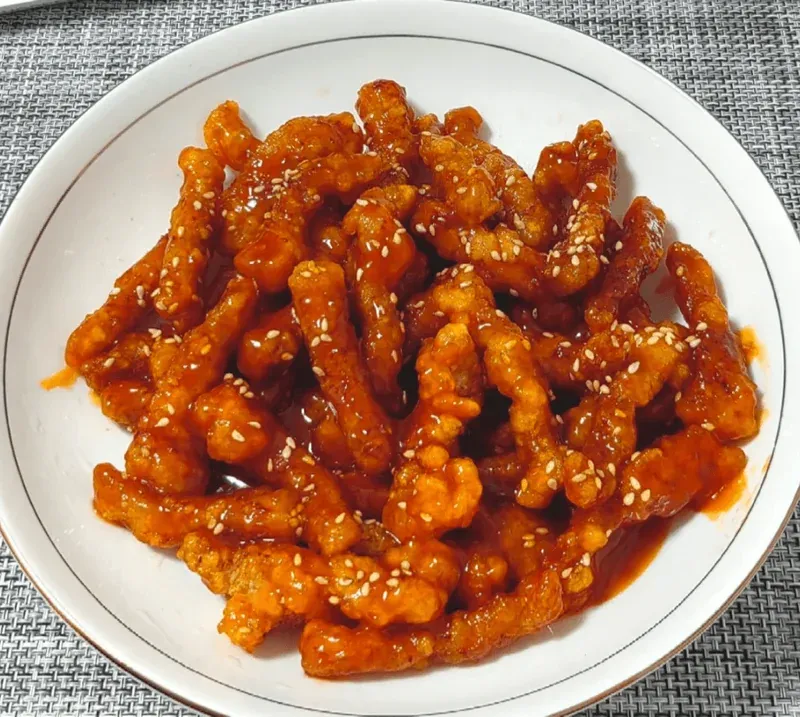
Kung Pao Chicken is a cherished gem from the heart of Sichuan Cuisine, a dish steeped in history and flavor. Named after the Qing Dynasty official Ding Baozhen, who was also known as “Gongbao,” this dish weaves a tapestry of flavors and textures. It combines succulent chicken pieces, crispy roasted peanuts, and aromatic dried chilies. The true hallmark of this dish is its “lychee flavor,” a perfect blend of sweet and sour notes, enhanced by the numbing sensation of Sichuan peppercorns and a gentle, lingering heat.
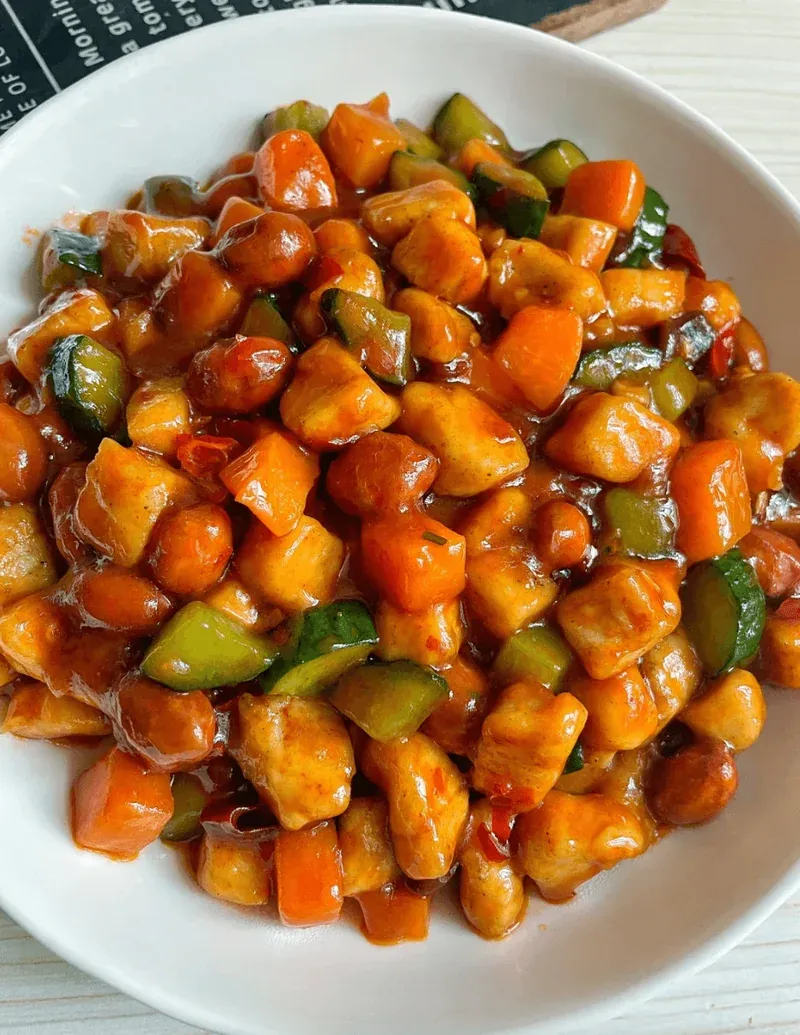
📋Ingredients
- 400g Chicken thigh meat (skinless and boneless, diced into 1.5cm cubes)
- 50g Roasted unsalted peanuts
- 10-15 Dried Sichuan red chilies (deseeded and cut into segments)
- 1 teaspoon Sichuan peppercorns
- 3 cloves Garlic (thinly sliced)
- 1 piece Ginger (about 10g, sliced into small rounds)
- 4 Scallions (white parts only, cut into 1cm segments)
- 2 tablespoons Vegetable oil
For the Marinade:
- 1 tablespoon Light soy sauce
- 1 tablespoon Shaoxing wine
- 1 teaspoon Cornstarch
For the Kung Pao Sauce:
- 2 tablespoons Sugar
- 2 tablespoons Zhenjiang black vinegar (or balsamic vinegar)
- 1 tablespoon Light soy sauce
- 1 teaspoon Dark soy sauce (for color)
- 1 teaspoon Cornstarch
- 1 tablespoon Water or chicken stock
🔪Cooking Instructions
Step 1: Marinating the Chicken
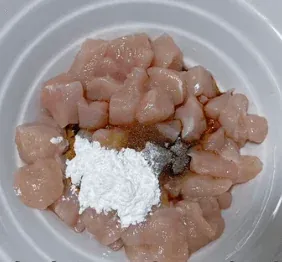
- Combine the diced chicken with light soy sauce, Shaoxing wine, and cornstarch. Mix thoroughly to ensure an even coating and let it rest for 15–20 minutes. This marinating process, known as “velveting,” ensures the chicken stays tender and juicy during the cooking process.
Step 2: Crafting the Signature Sauce
- In a small bowl, mix sugar, black vinegar, light and dark soy sauces, cornstarch, and water until the sugar dissolves. Preparing this sauce in advance is key for the fast cooking method known as “Bao Chao.”
Step 3: Flavoring the Oil
- Warm the vegetable oil in a wok over medium-low heat. Add the Sichuan peppercorns and dried chili segments, stirring until the chilies become a deep red, releasing their fragrance without burning. This step infuses the oil with the characteristic “Ma La” flavor.
Step 4: Cooking the Chicken
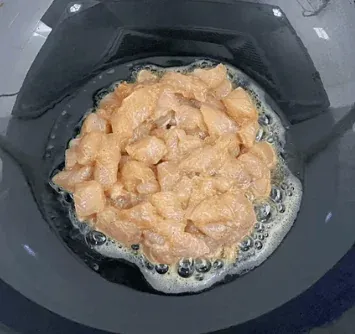
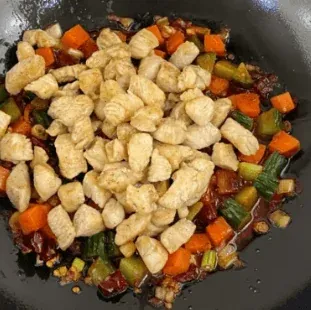
- Increase the heat to high and add the marinated chicken cubes. Stir-fry quickly for 2–3 minutes until the chicken turns opaque.
Step 5: Adding Aromatics
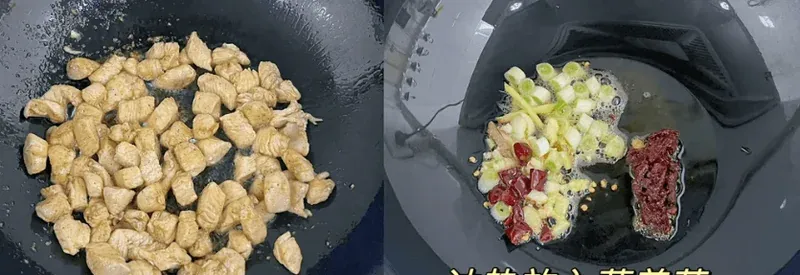
- Push the chicken to the wok’s sides, then add the ginger, garlic, and scallion whites in the center. Stir-fry for about 30 seconds until their aroma is released.
Step 6: Finalizing the Dish
- Stir the pre-prepared sauce to redistribute the starch, then pour it into the wok. Toss everything together over high heat for about a minute. As the sauce thickens and forms a glossy glaze, add the roasted peanuts and give a final toss to coat evenly. Serve hot.
Key Tips & Suggestions
- Balancing the Lychee Flavor: The unique taste profile comes from equal parts sugar and vinegar, providing an initial sweetness followed by a tangy finish that complements the chili heat.
- Maintaining Peanut Crispness: Add peanuts just before serving to preserve their crunch, providing a contrast to the tender chicken.
- Avoiding Bitter Chilies: Monitor the chilies closely in Step 3 to prevent them from burning and turning bitter. Aim for a deep mahogany hue.
- Choosing the Right Chicken: While chicken breast can be used, thigh meat is recommended for its higher fat content, leading to a juicer dish.
🧪Nutritional Information (Per Serving)
- Calories: Approximately 390 kcal
- Protein: 29 g
- Total Fat: 22 g (Mainly healthy unsaturated fats from peanuts)
- Carbohydrates: 19 g (Including sugars in the sauce)
- Iron: 12% DV
- Sodium: 700 mg