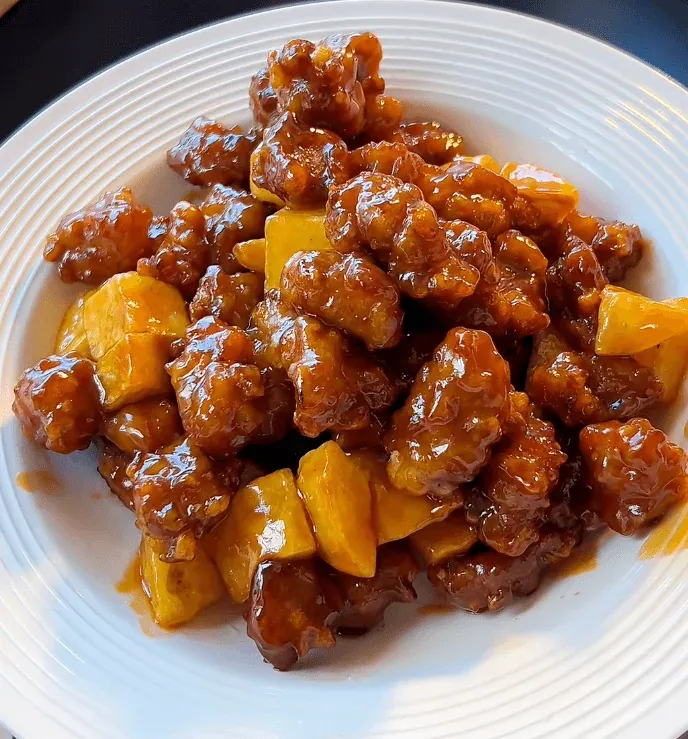
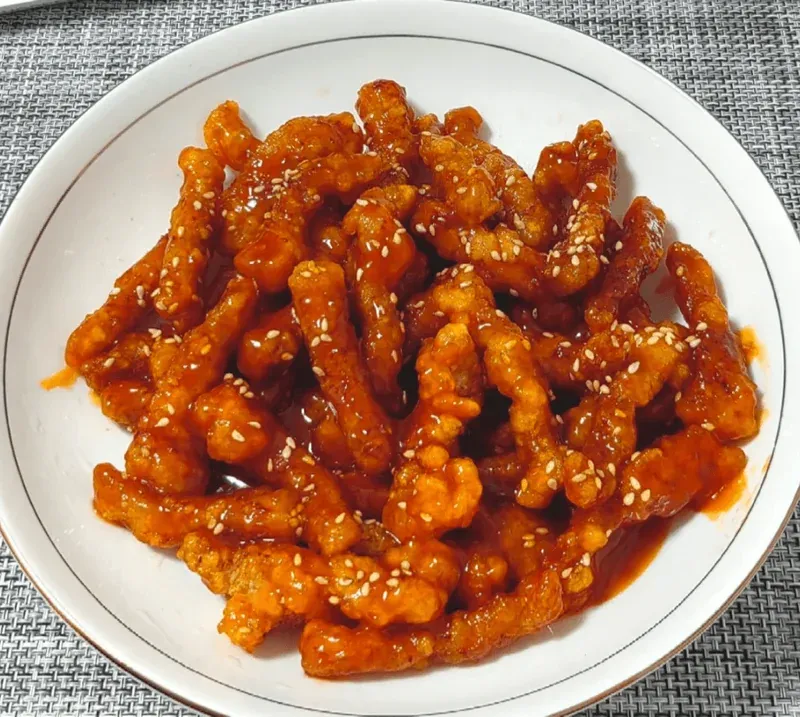
Sweet and Sour Pork Tenderloin is a celebrated dish in the realm of Chinese home-style and banquet cooking. This version stands apart by focusing purely on the succulent pork and its crispy coating, unlike its Cantonese counterpart which often incorporates fruits and vegetables. The dish is renowned for its delightful contrast between the crunchy exterior and tender, juicy interior. The sauce, a masterful blend of ketchup, sugar, and vinegar, offers a taste that is both sweet and tangy, winning hearts globally.
📋Ingredients
- 350g Pork tenderloin (sliced into 1cm x 4cm pieces)
- 1 Egg white
- 1/2 cup Cornstarch or Sweet potato starch (for batter)
- 2 tablespoons All-purpose flour
- 1 tablespoon Shaoxing wine
- 1/2 teaspoon Salt and a pinch of white pepper
- 4 tablespoons Ketchup
- 2 tablespoons White vinegar or Rice vinegar
- 3 tablespoons White sugar
- 1 tablespoon Cornstarch slurry (1 tsp starch mixed with 2 tsp water)
- 500ml Vegetable oil (for deep frying)
- 1 teaspoon Toasted white sesame seeds (for garnish)
🔪Cooking Method
Step 1: Preparing the Pork
- Start by combining the pork strips with salt, white pepper, and Shaoxing wine in a bowl. Mix thoroughly and let it sit for about 15 minutes. This marination process helps infuse the pork with rich flavors and eliminates any unwanted odors.
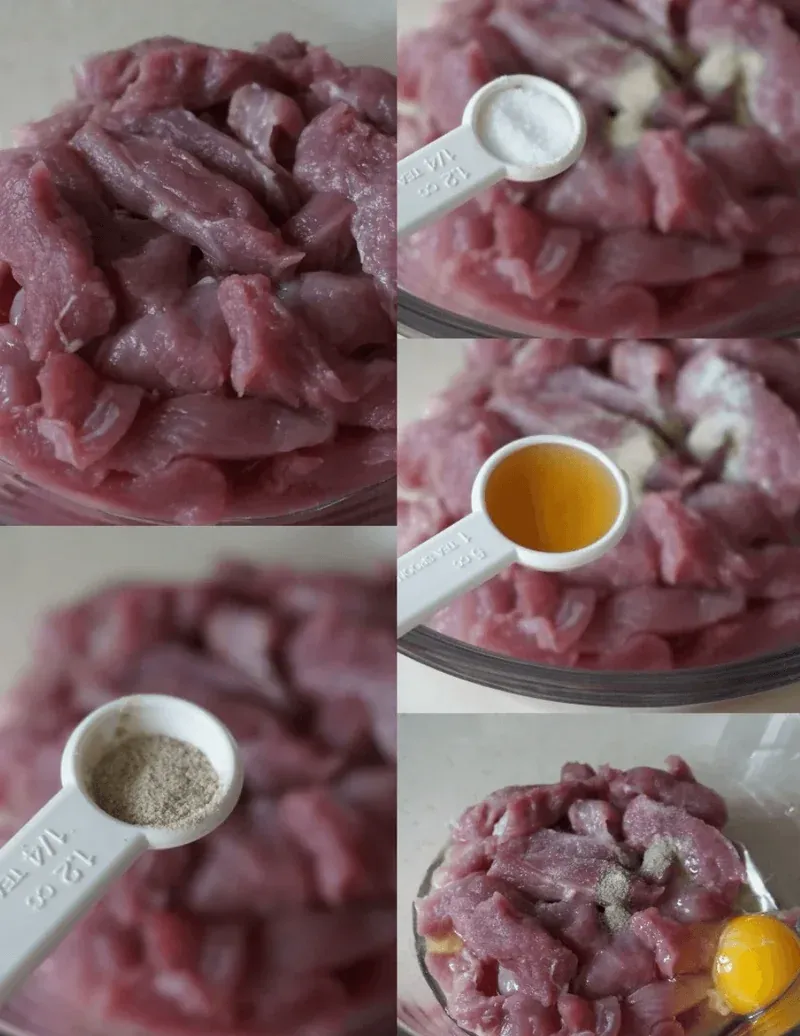
Step 2: Crafting the Batter
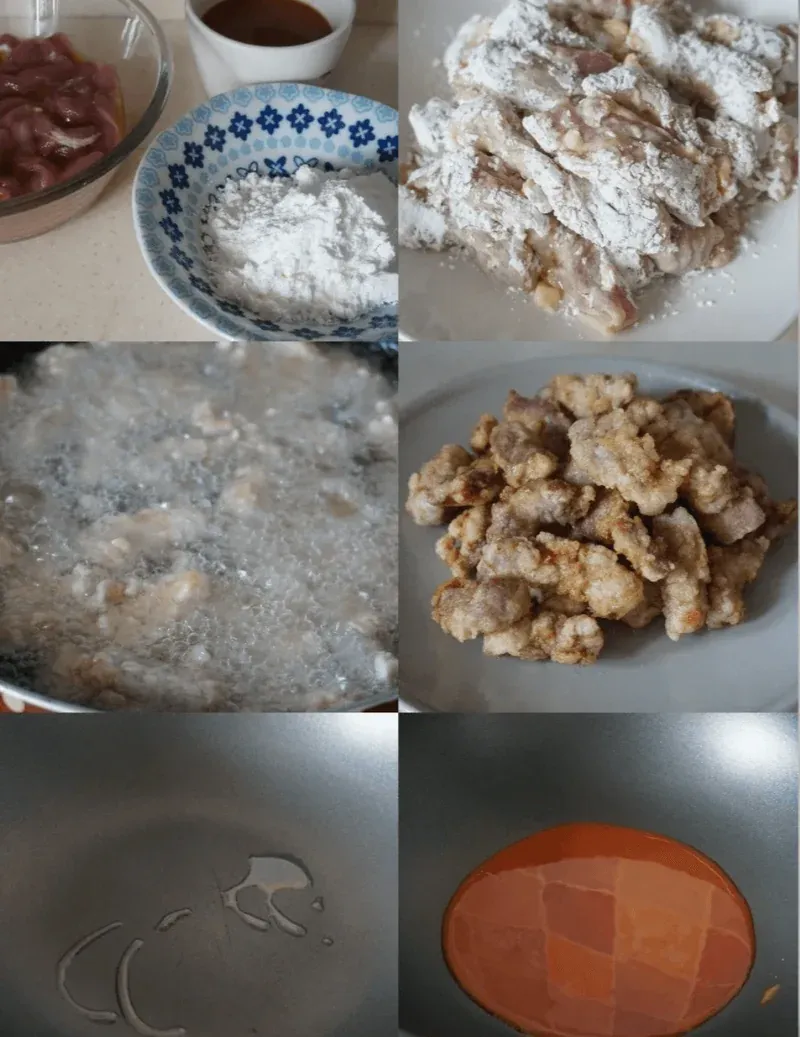
- In a separate bowl, mix cornstarch, flour, egg white, and a touch of water until you achieve a thick, creamy batter. It should be thick enough to cling well to the pork. Coat each pork strip evenly in this batter.
Step 3: First Fry for Shape
- Heat the oil to around 160°C (320°F). Carefully drop each pork strip into the oil individually to prevent them from sticking. Fry for approximately 2–3 minutes until the batter is set and the color turns a light yellow. Remove and drain.
Step 4: Second Fry for Crispiness
- Increase the oil temperature to about 190°C (375°F). Return the pork strips to the oil for a quick second fry, lasting 30–45 seconds. This step is crucial to achieve that perfect golden-brown crust. Drain them immediately after.
Step 5: Creating the Glaze
- In a clean wok, combine ketchup, sugar, vinegar, and a dash of water. Simmer over medium heat until the sugar dissolves and the mixture begins to bubble. Add the cornstarch slurry to thicken the sauce to a sticky, glossy finish.
Step 6: Coating the Pork
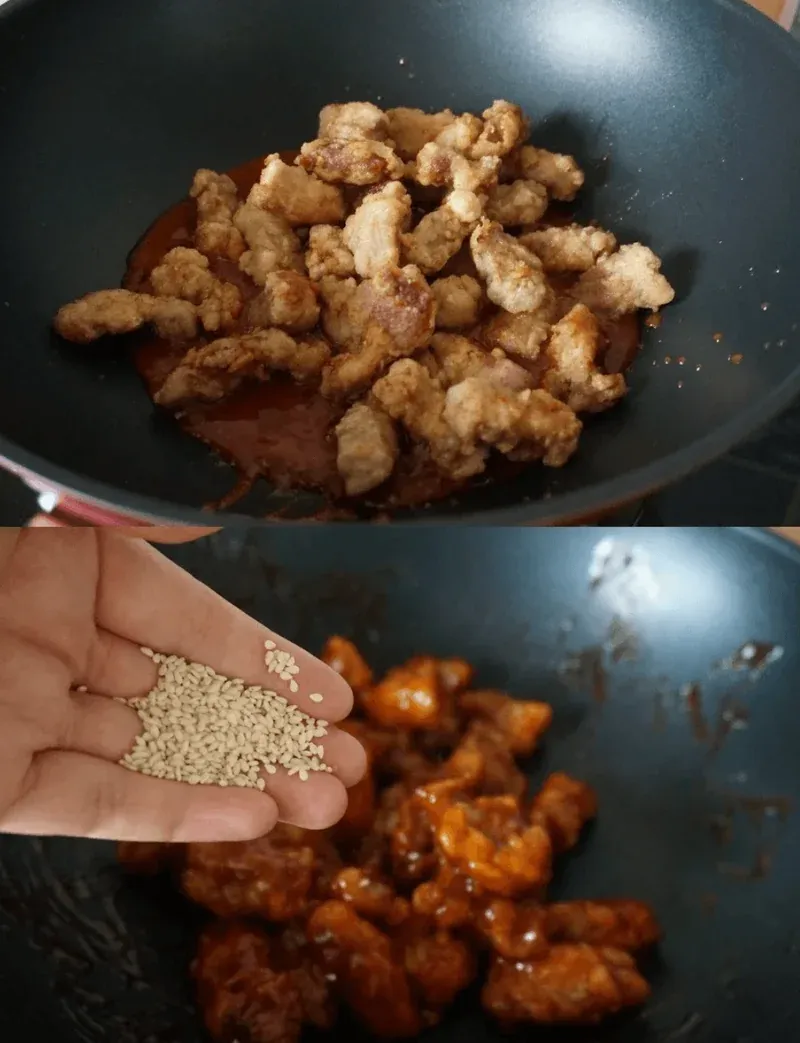
- Quickly toss the fried pork strips in the glaze, ensuring each piece is well-coated. This should only take 10–15 seconds to maintain the crispy texture. Garnish with sesame seeds and serve immediately.
Key Tips for Perfection
The Double Fry Technique: Essential for achieving the right texture. The initial fry cooks the meat, while the second fry ensures the crispiness that holds up against the sauce.
Batter Thickness: The batter should be thick enough to coat the pork without being overly doughy. It needs to adhere well before frying.
Balancing Flavors: The sauce should lean slightly more toward sweetness than sourness. Adjust the sugar and vinegar to suit your taste, but keep the ketchup for its unique color and flavor depth.
Serve Without Delay: To enjoy the full experience, serve the dish immediately while the pork is hot and the coating is crisp.
🧪Nutrition Information (Per Serving)
- Calories: Approximately 440 kcal
- Protein: Around 21 g
- Total Fat: About 24 g (subject to oil absorption)
- Carbohydrates: Roughly 34 g
- Vitamin C: 9% DV
- Sodium: 510 mg