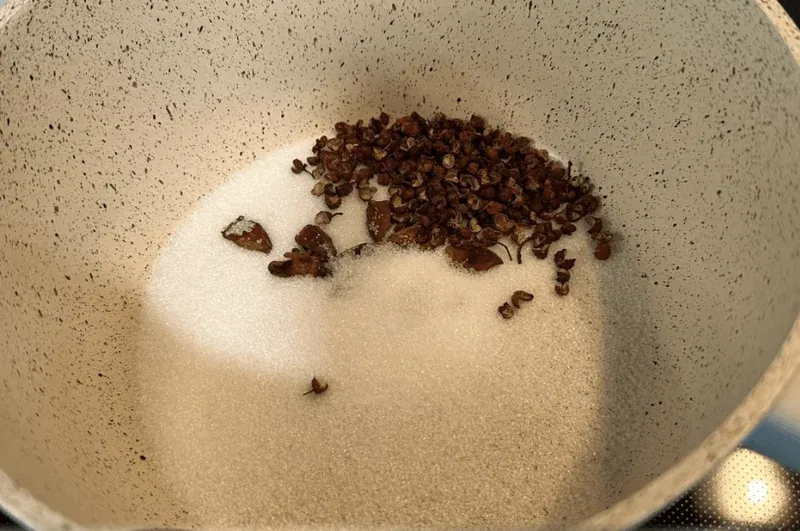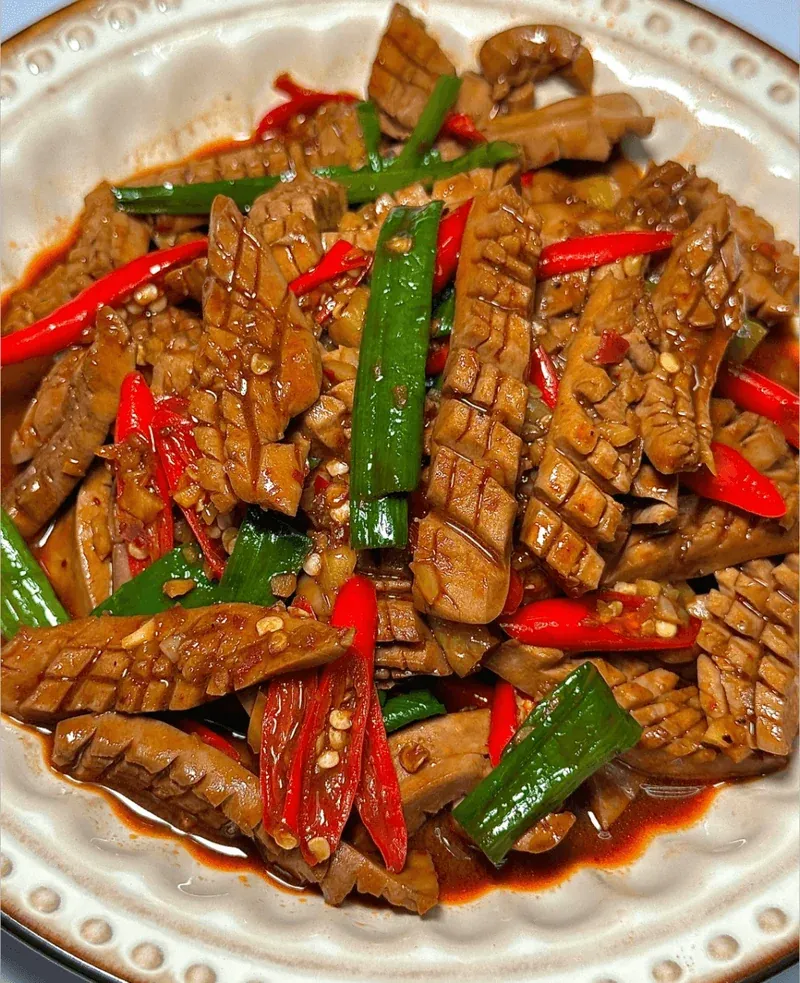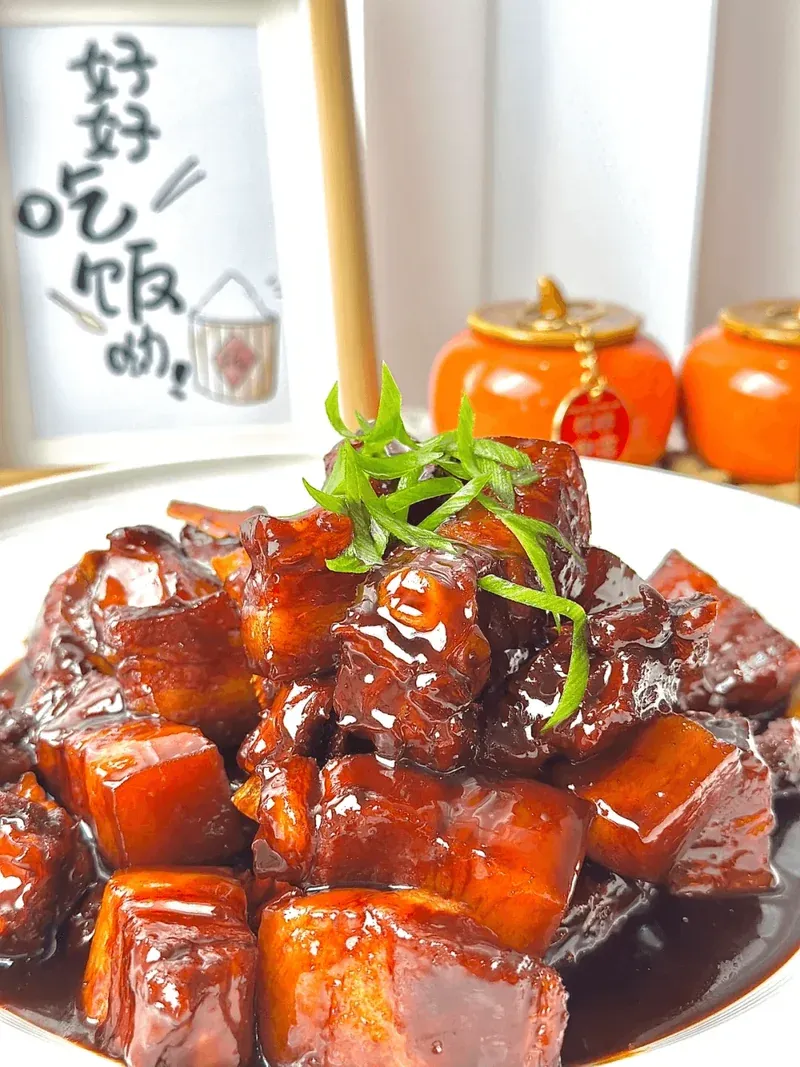
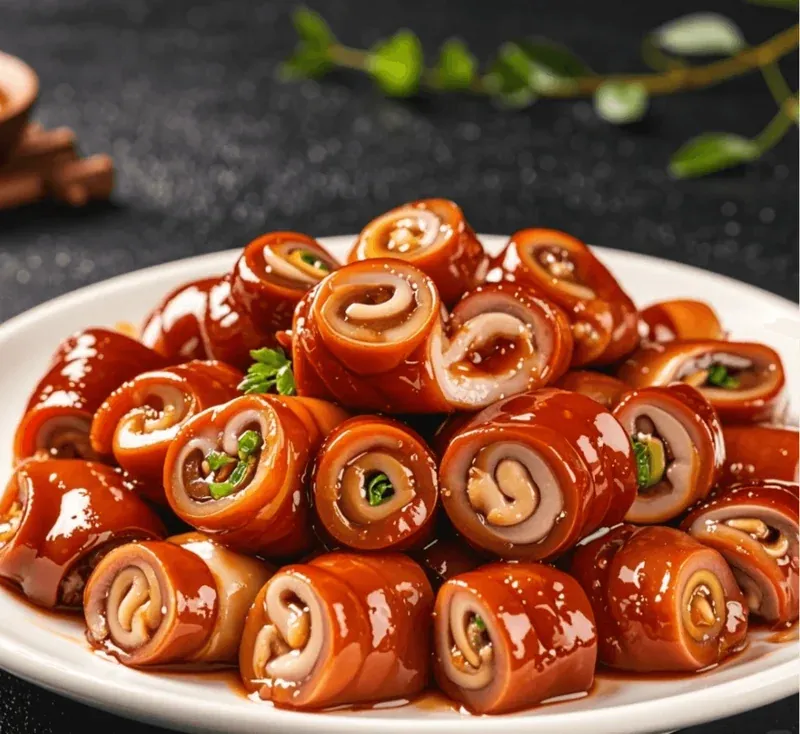
Braised Intestines in Brown Sauce, known as Jiu Zhuan Da Chang, stands as a testament to the rich culinary tradition of Shandong. This exquisite dish, tracing back to the Qing Dynasty period in Jinan, draws its name from the complex, nine-stage preparation method, reminiscent of the ancient nine-fold alchemy in Taoism. Renowned for its reddish-brown, glossy finish, the dish offers a delicate balance of tender and chewy textures with a taste that elegantly combines sweetness, tanginess, and subtle heat. Mastering this recipe is a true mark of a chef’s expertise in meticulous cleaning, precise layering, and skillful temperature management.
📋Ingredients
- Approx. 950g Fresh pork intestines
- 3 tablespoons Flour, 2 tablespoons Vinegar (for cleansing)
- 45g Rock sugar (for caramelization)
- 2 tablespoons Soy sauce (blend of light and dark)
- 3 tablespoons Premium aged vinegar (preferably Zhenjiang or Shanxi)
- 2 tablespoons Shao xing wine
- 1 teaspoon Ground white pepper
- 1/2 teaspoon Ground cinnamon and star anise
- 1/2 teaspoon Sand ginger powder (Shan Nai)
- 30g Ginger and 30g Garlic (finely minced)
- 2 Scallions (using only the white part, finely chopped)
- 500ml Vegetable oil (for deep frying)
- 1 cup Bone broth or water
🔪Cooking Instructions
Step 1: Thorough Cleansing
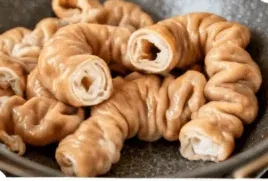
- Invert the intestines and scrub diligently using flour, salt, and vinegar to eradicate odors and impurities. Continue rinsing under cold water until the water is clear, ensuring thorough cleanliness.
Step 2: Folding and Pre-boiling
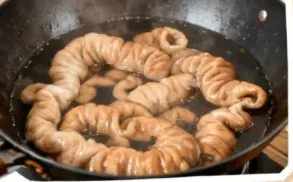
- Layer the intestines by folding one section into another, forming a compact, thick tube. Secure with toothpicks if required. Boil in a pot with ginger, scallions, and Shaoxing wine for about 60–90 minutes until tender. Allow to cool before slicing into 3cm rings.
Step 3: Frying to Perfection
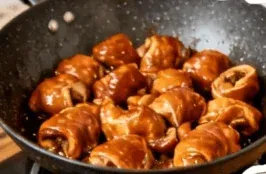
- Heat oil to roughly 180°C (350°F). Deep-fry the intestine rings for 1–2 minutes until they achieve a golden-red, crispy finish. Drain immediately. This technique seals the shape and contributes to the texture.
Step 4: Caramelization and Braising
- In a clean wok, dissolve rock sugar in a bit of oil to achieve an amber hue. Add minced ginger, garlic, and scallions to infuse aroma. Incorporate the broth, soy sauce, vinegar, and fried intestines. Simmer over medium-low heat.

Step 5: The Nine Turns Reduction
- Spice with white pepper, cinnamon, star anise, and sand ginger powders. Maintain a simmer, consistently spooning sauce over the rings. As the liquid reduces, it forms a thick, glossy glaze that snugly adheres to the meat, embodying the ‘Nine Turns’ technique.

Crucial Tips & Insights
- Foundation of Cleaning: Proper cleansing is pivotal. Inadequate cleaning will allow residual odors to disrupt the delicate spice harmony.
- Nesting Method: The nesting (layering technique) imparts the dish’s distinct texture. Without it, the intestines might be too thin, losing their characteristic bite.
- Flavors in Harmony: Achieving a balance between vinegar and sugar is vital. The vinegar adds a refreshing brightness that complements the intestine’s rich fats, while spices provide the essential bitter and spicy undertones.
- Natural Glazing: Avoid using starch slurries for thickening. The sauce should naturally thicken through sugar reduction and collagen from the intestines.
🧪Nutritional Details (Per Serving)
- Calories: 410 kcal
- Protein: 17 g
- Total Fat: 31 g
- Carbohydrates: 14 g (mainly from rock sugar glaze)
- Iron: Approximately 11% DV
- Sodium: 620 mg