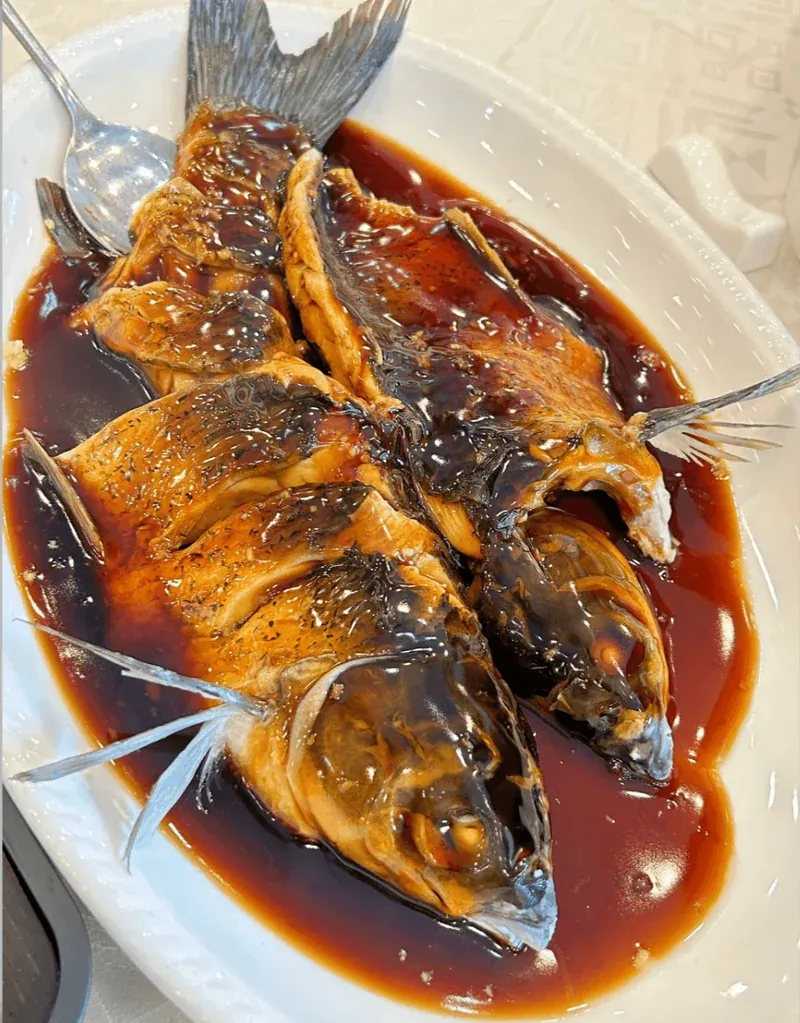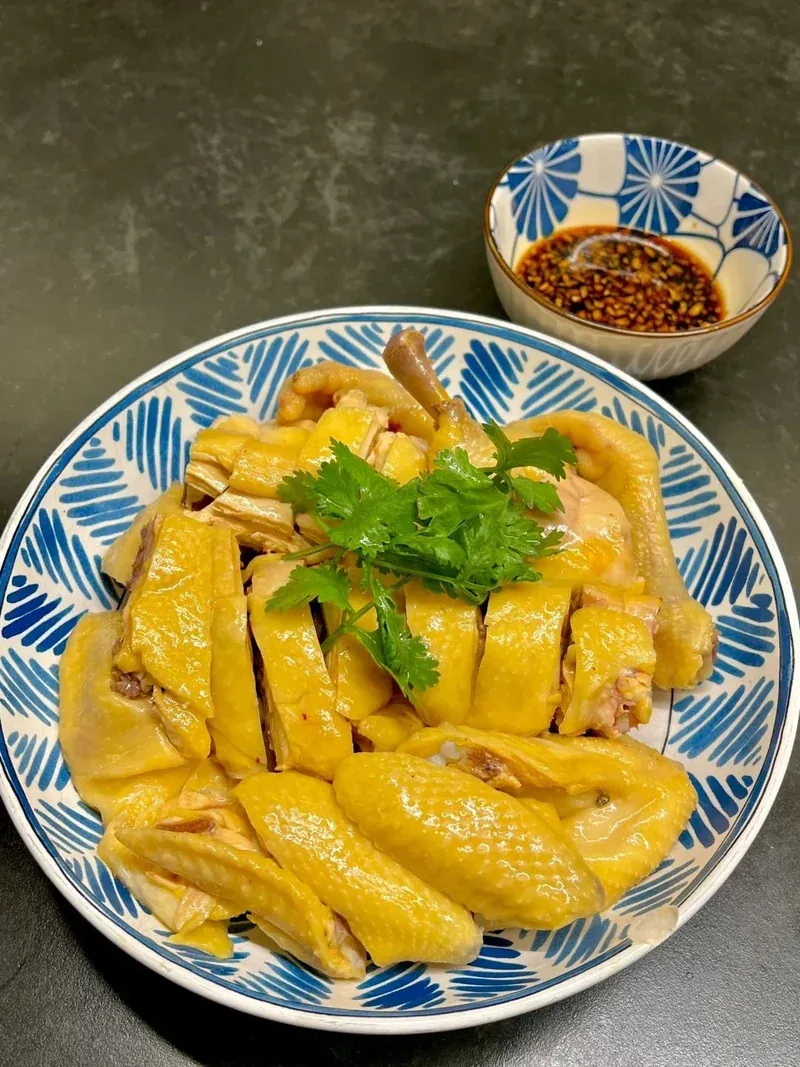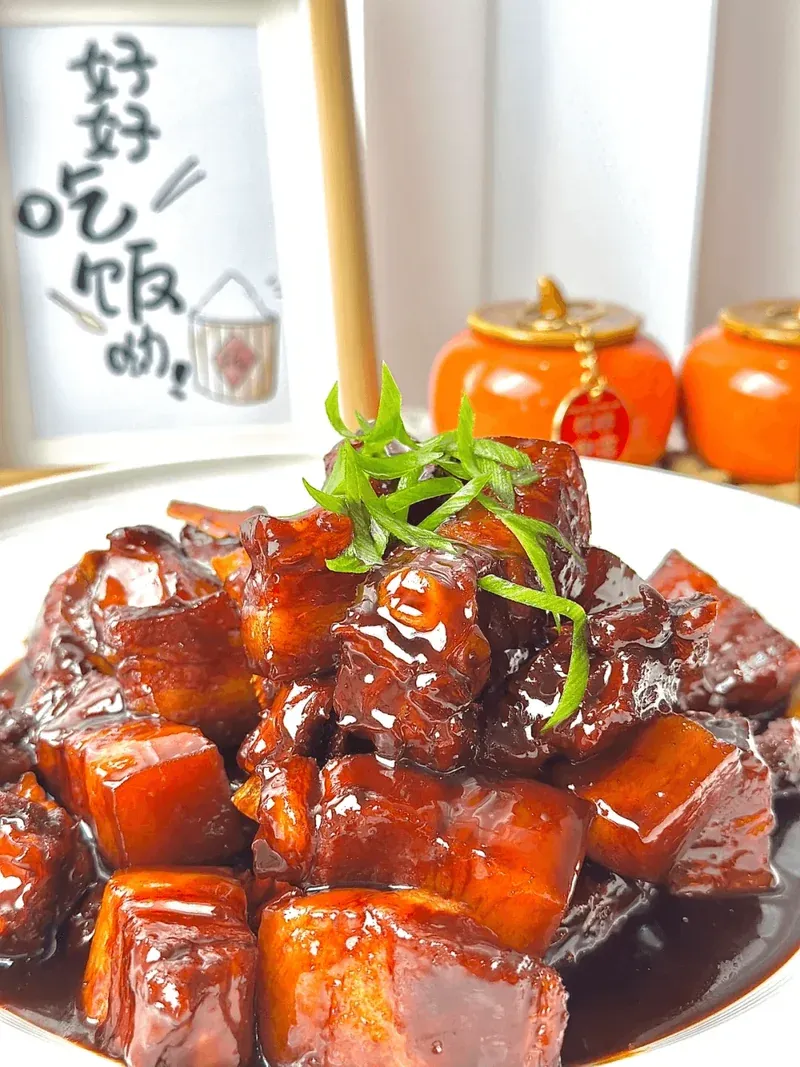
To truly appreciate the sophistication of Chinese culinary traditions, one must delve into the world of Huaiyang cuisine. Unlike the intense heat of Sichuan dishes or the robust flavors of northern China, Huaiyang cuisine is celebrated for its delicate balance and meticulous preparation.
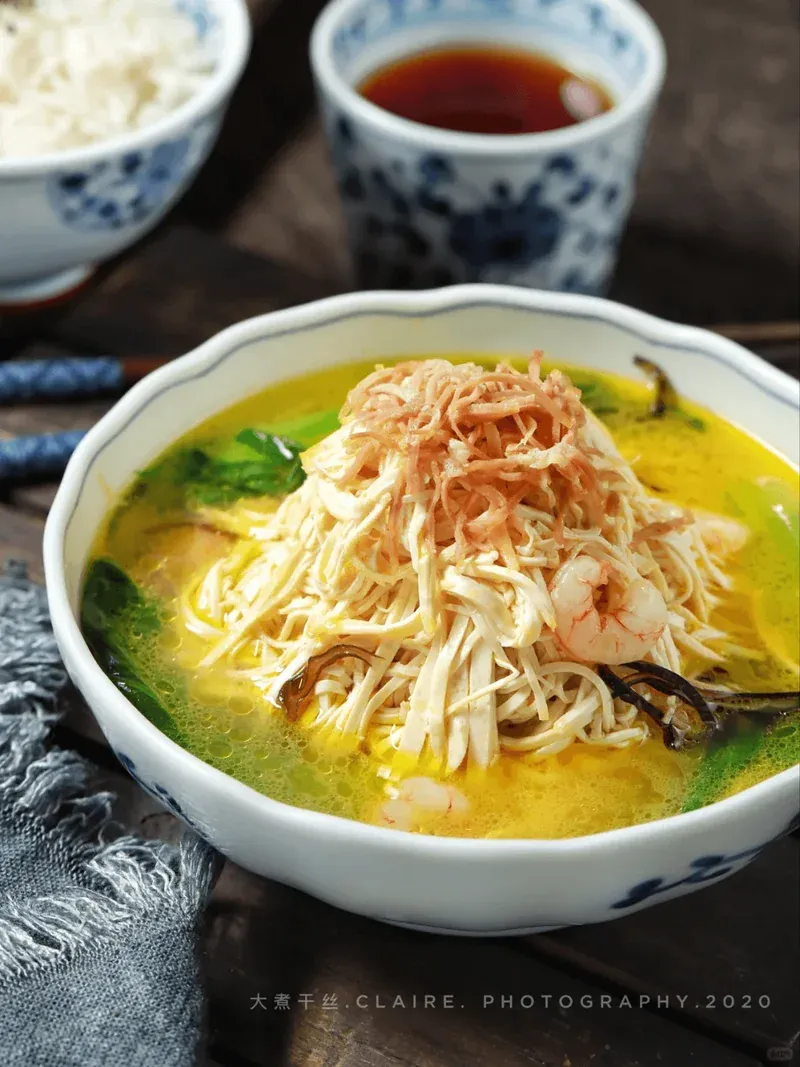
The dish known as Da Zhu Gan Si or Braised Shredded Tofu is a quintessential example. This dish transforms a simple block of pressed tofu into a tapestry of fine threads that absorb a sumptuous, golden broth. It was a cherished delicacy among Qing Dynasty emperors, revered for its subtle yet profound umami flavors.
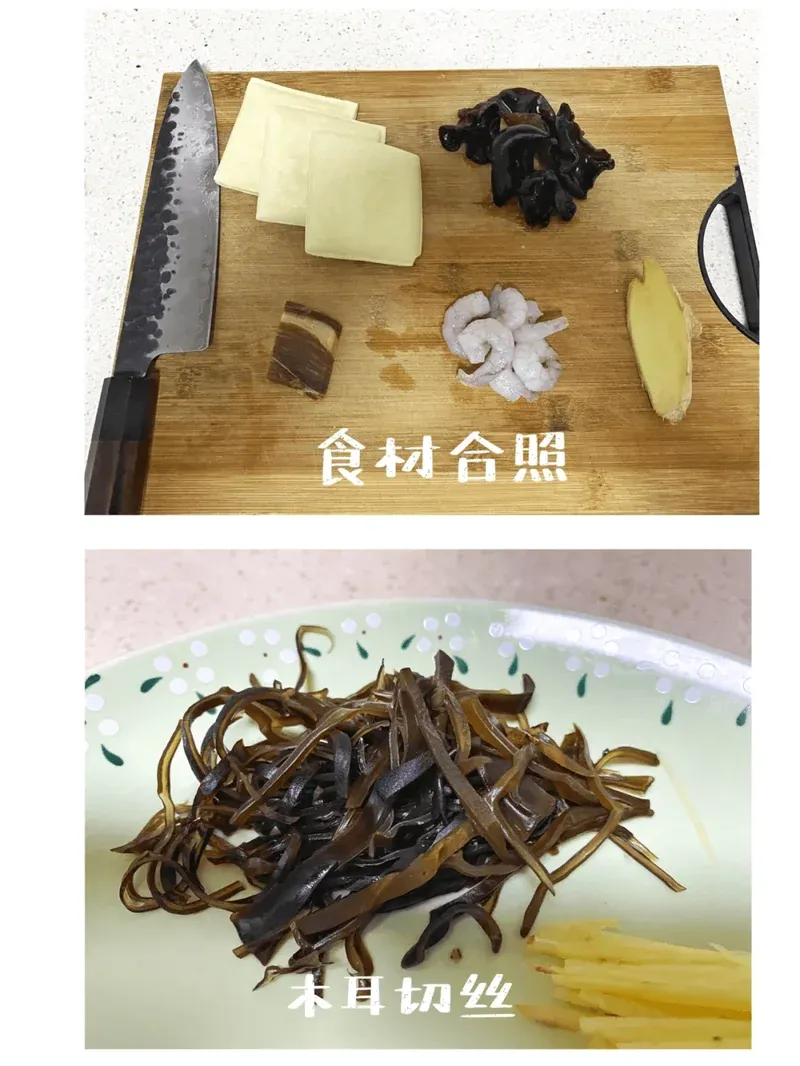
📋 Ingredients
Key Components
- 3 blocks of Pressed Tofu (Bai Gan): Essential for its firmness, enabling it to be sliced into fine threads.
- Approximately 38g of Jinhua Ham: This ingredient is critical, much like an artisanal cured meat, offering depth to the broth. Avoid using standard ham as a substitute.
- 6-8 Fresh Shrimp: Cleaned and deveined.
- Around 38g of Wood Ear Mushrooms: Rehydrated and thinly sliced.
- Aromatic Ginger: A sizable piece, shredded finely.
The Luscious Broth
- Rapeseed Oil: Chosen for its natural golden tone and distinctive aroma.
- Premium Chicken Stock or Essence: 2 cups for depth.
- Baby Bok Choy: Adds a burst of green for visual appeal.
🔪 Instructions: Achieving Culinary Mastery
Step 1: Precision in Slicing
This is a meditative step, embracing the art of knife skills.
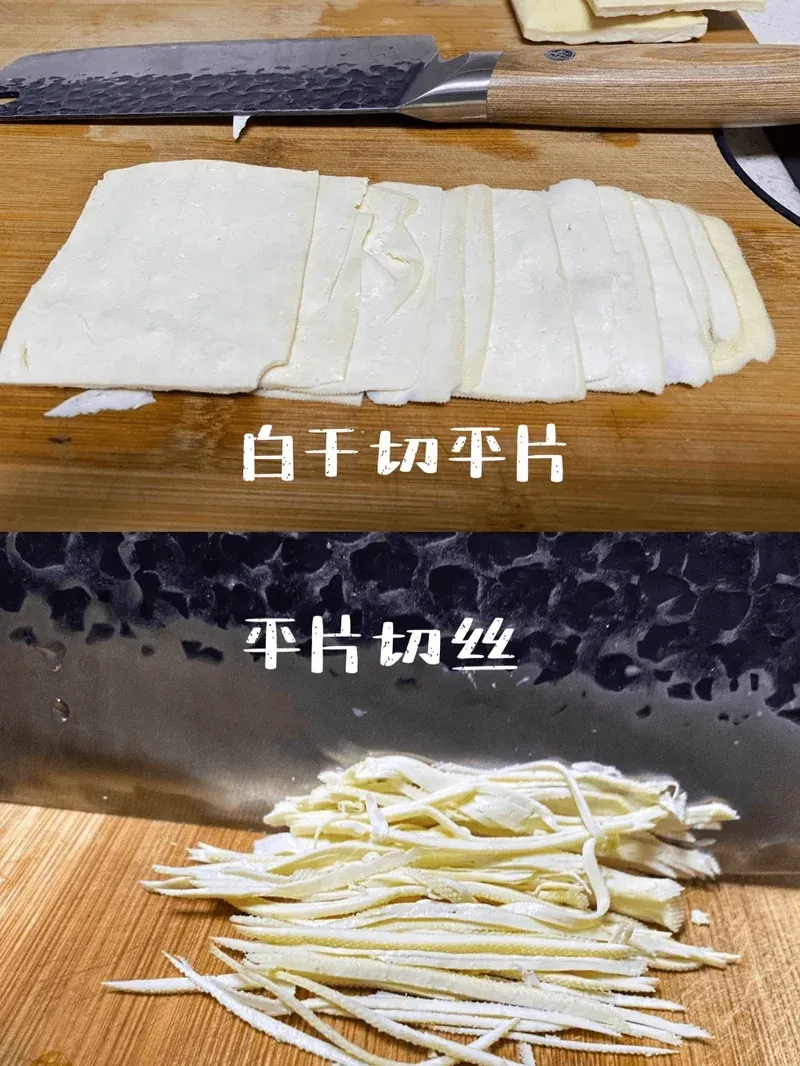
- Tofu Slicing: Each block should be horizontally sliced into ultra-thin sheets. Finer sheets result in more delicate threads.
- Creating the Threads: Stack the sheets and carefully cut them into slender, noodle-like threads.
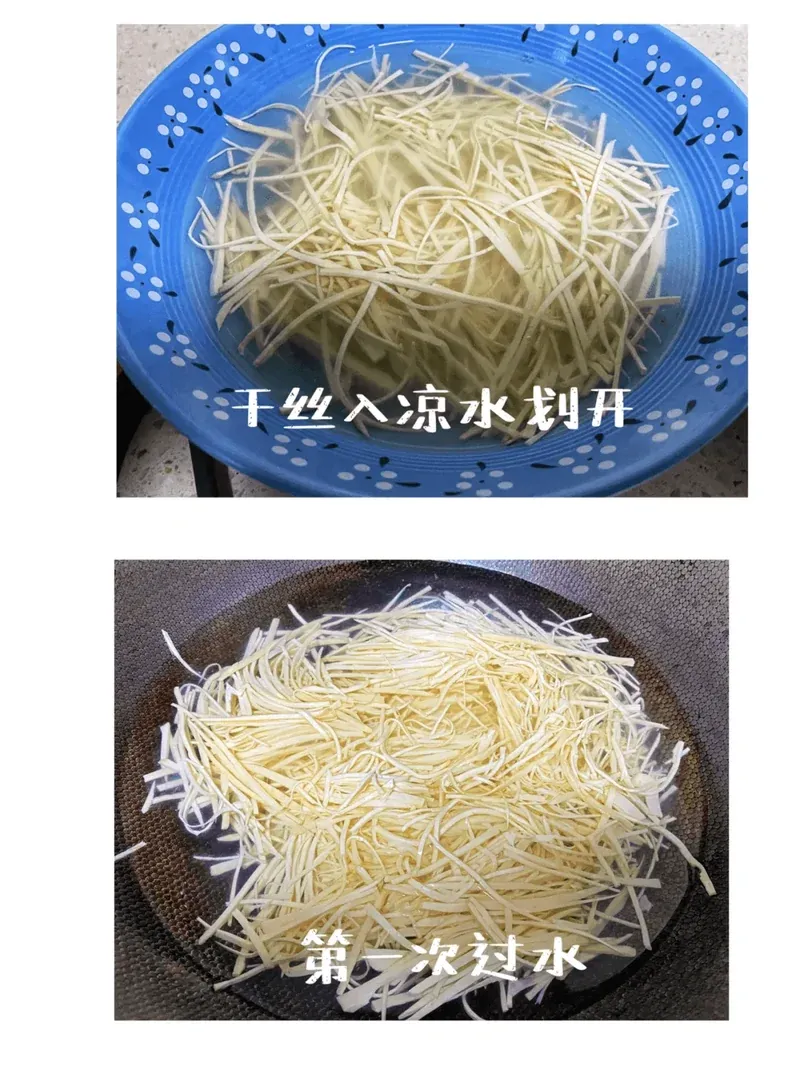
- Soaking: Submerge the shredded tofu in a bowl of cold water. Use chopsticks to gently separate the strands.
Step 2: Crafting Complementary Threads
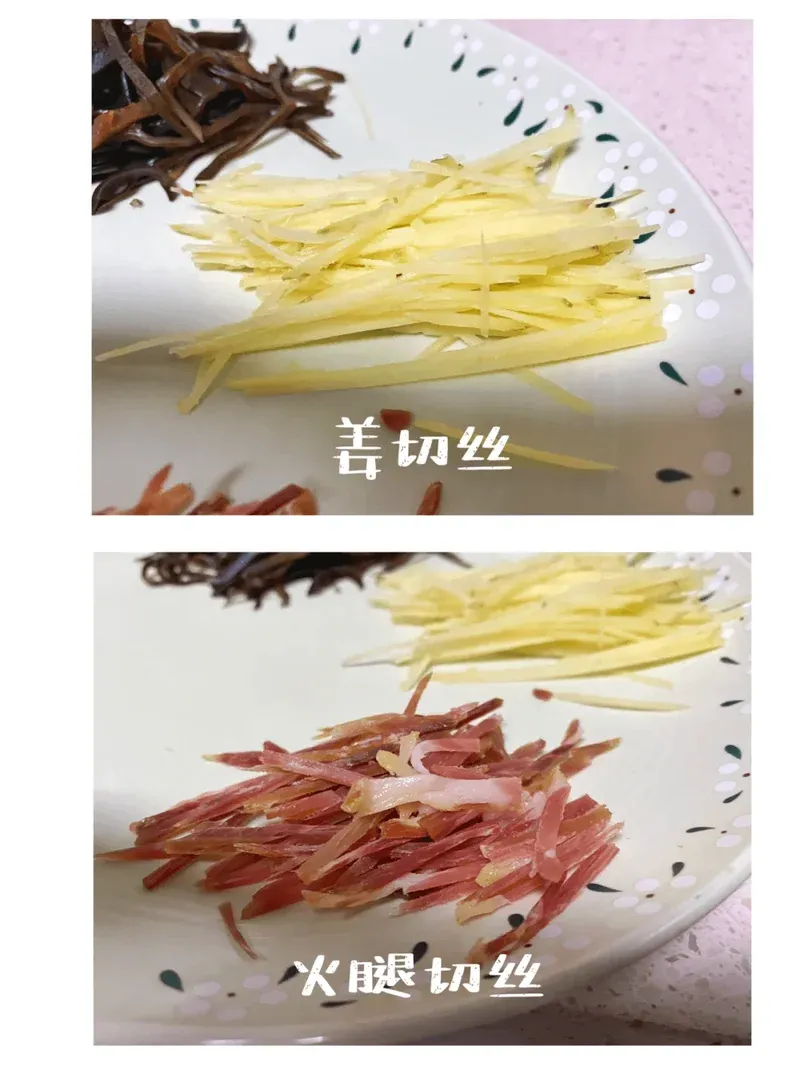
Shred the Jinhua ham, wood ear mushrooms, and ginger to match the tofu’s fineness. In Huaiyang cooking, visual consistency is as crucial as flavor.
Step 3: Initial Blanching (Eliminating Rawness)
Introduce the tofu threads to a pot of cold water, bring it to a boil, then drain and refresh in cold water.
Culinary Insight: This step is essential for removing the “raw bean” aroma (dou xing wei), softening the protein fibers for a tender texture.
Step 4: Secondary Blanching (Enhancing Texture)
Boil a fresh pot of water, adding tofu threads, wood ear mushrooms, and shrimp. Once boiling, drain and cool in cold water. This ensures the shrimp are perfectly cooked, and the tofu attains the right texture.
Step 5: Creating the Golden Broth
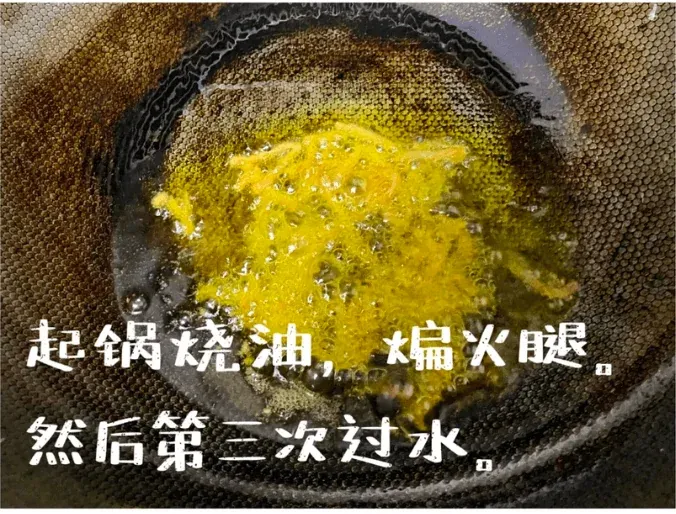
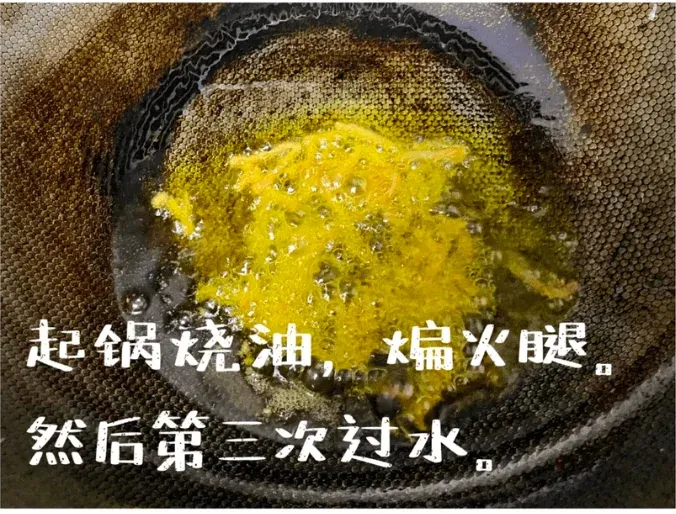
Warm a liberal amount of rapeseed oil in a wok on low heat. Sauté the Jinhua ham threads until aromatic and the oil turns a light yellow. Pour in 2 cups of boiling water and add the chicken stock. This results in a robust emulsion. Set aside some ham for garnishing.
Step 6: The Final Braise
Combine the blanched tofu, wood ear mushrooms, shrimp, and ginger needles with the golden broth. Simmer gently for 3–5 minutes.
- The Magic: The tofu threads absorb the broth’s salinity and richness, enhancing the dish’s depth.
Step 7: Artistic Plating
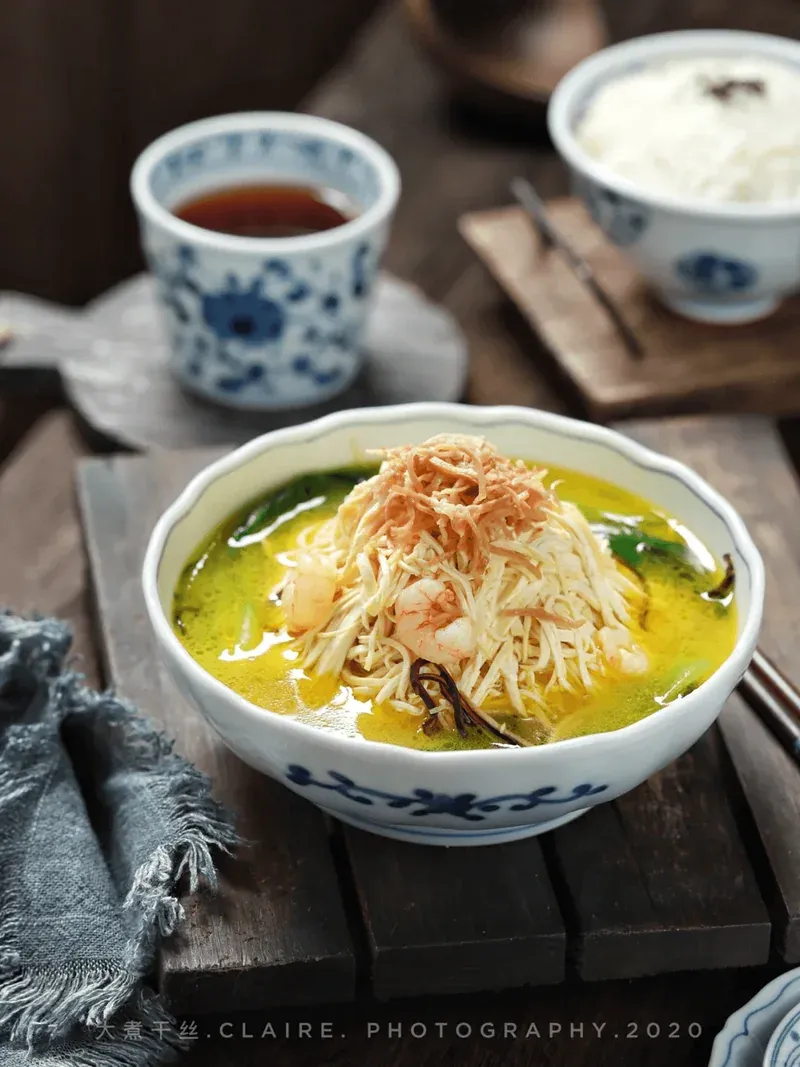
Using chopsticks, arrange the tofu threads in the center of a shallow bowl, forming a “pagoda.” Pour the broth around, and garnish with reserved ham and blanched baby bok choy.
💡 Culinary Insights
- Rapeseed Oil’s Appeal: Its vibrant color is reminiscent of traditional Chinese versions of the “Golden Broth,” making it a natural choice for authenticity.
- Alternative Slicing Technique: Try angling your slices at 45 degrees for easier shredding. A helpful tip for newcomers.
- A Noodle Alternative: Market this dish as a low-carb, gluten-free noodle soup. The tofu threads mimic pasta’s “slurp” but with enhanced protein content.
🧪 Nutritional Breakdown (Per Serving)
- Calories: Approximately 198 kcal
- Protein: 23g (A robust blend of plant and animal sources)
- Total Fat: 8g
- Carbohydrates: 4.5g
- Advantages: Low glycemic index, high in calcium and isoflavones.