Nanjing Salted Duck, a cherished delicacy from the heart of Nanjing, speaks to centuries of culinary tradition. Unlike its roasted or braised counterparts, this dish is celebrated for its distinctive preparation method that includes a dry rub of spiced salt, a brine soak, and a gentle poaching process. The result is a duck with porcelain-like skin and tender, flavorful meat that is a true testament to the art of traditional Chinese cooking. This dish is especially popular during the Mid-Autumn Festival, where it is fondly referred to as ‘Osmanthus Duck,’ a nod to the fragrant flowers that bloom during this season.
📋Ingredients
- 1 Whole duck (about 2kg, skin-on and cleaned)
- 100g Coarse sea salt
- 2 tablespoons Sichuan peppercorns
- 50g Fresh ginger (sliced)
- 3 Scallions (tied into knots)
- 2 Star anise
- 1 piece Cassia bark (Cinnamon stick)
- 2 tablespoons Shaoxing wine
- Water (enough to cover the duck)
🔪Cooking Instructions
Step 1: Toasting the Aromatic Salt
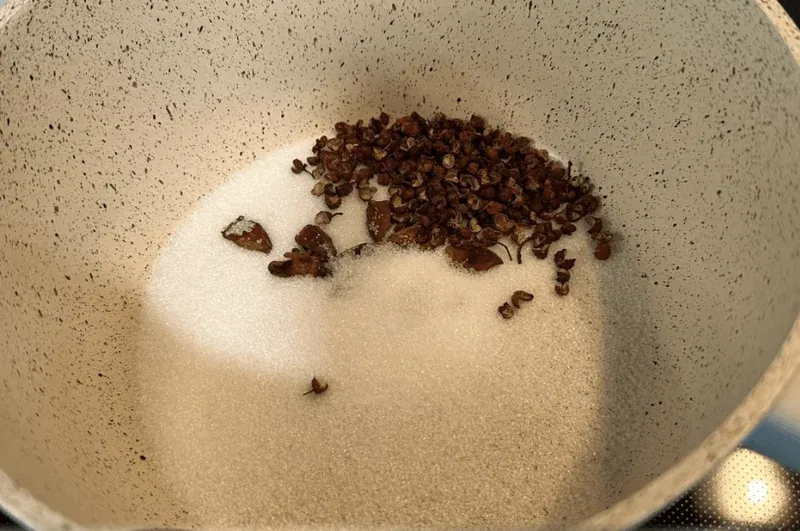
- In a dry pan over medium heat, toast the coarse sea salt with Sichuan peppercorns, stirring frequently until the salt acquires a golden hue and the peppercorns release their fragrance. Allow the mixture to cool slightly while maintaining warmth.
Step 2: Applying the Dry Rub
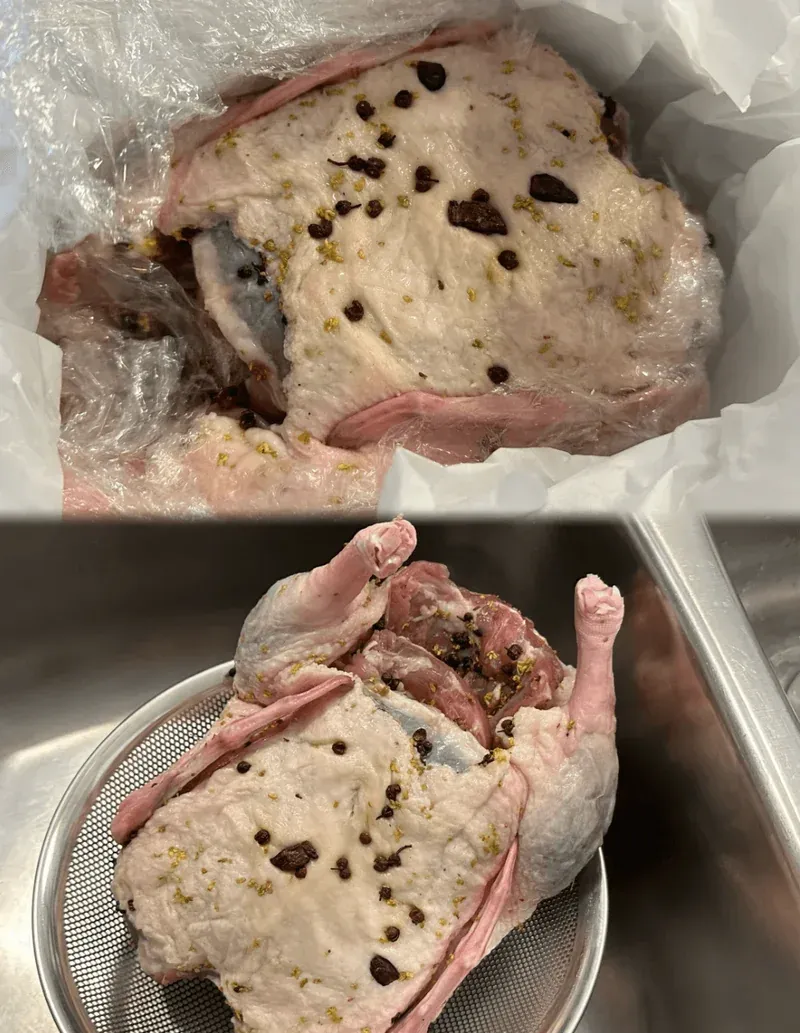
- While the salt mixture retains warmth, vigorously rub it over the entire duck, ensuring coverage in the cavity and under the wings. This dry rub is crucial for infusing flavor and firming the meat. Rest the duck in a covered container in the refrigerator for 2–3 hours.

Step 3: Immersing in Brine
- Rinse away excess salt from the duck. Submerge it in a bowl of cold water seasoned with salt, ginger, star anise, and scallions. This brine bath ensures the meat remains succulent and deeply flavored. Chill in the refrigerator for another 2 hours.
Step 4: Poaching to Perfection
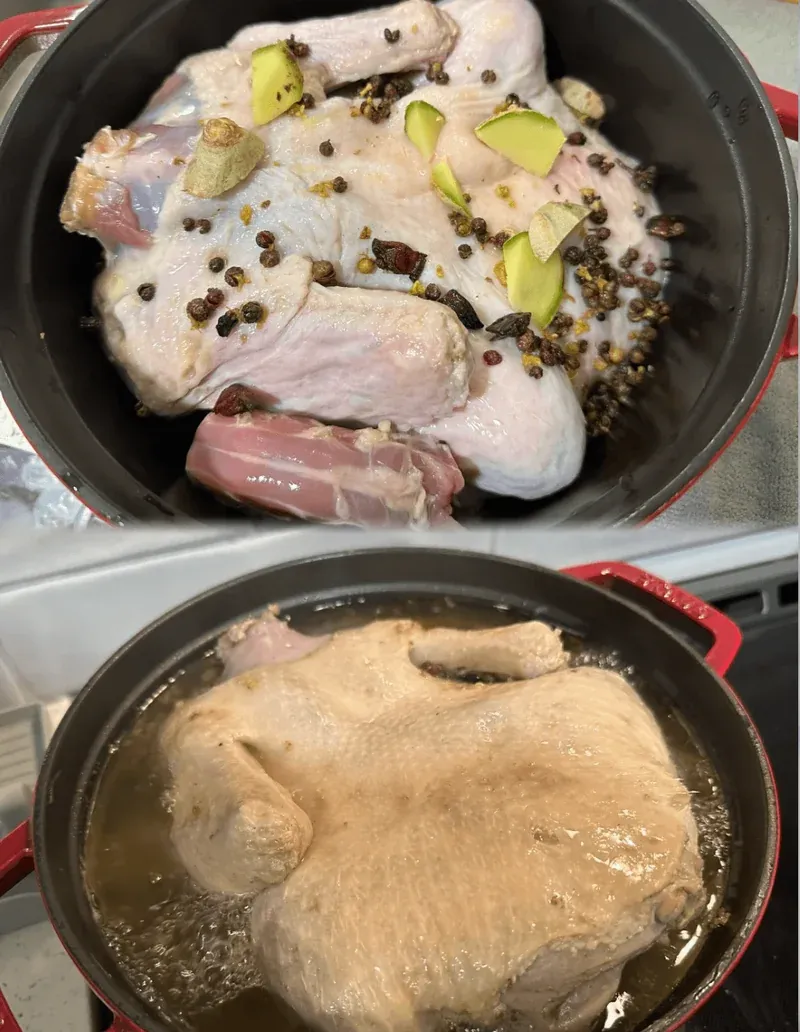
- In a large pot, bring water to a gentle simmer alongside ginger, scallions, and Shaoxing wine. Avoid letting the water boil. Submerge the duck and maintain a gentle simmer (around 85-90°C) for 40–50 minutes to achieve unmatched tenderness.
Step 5: Cooling and Setting
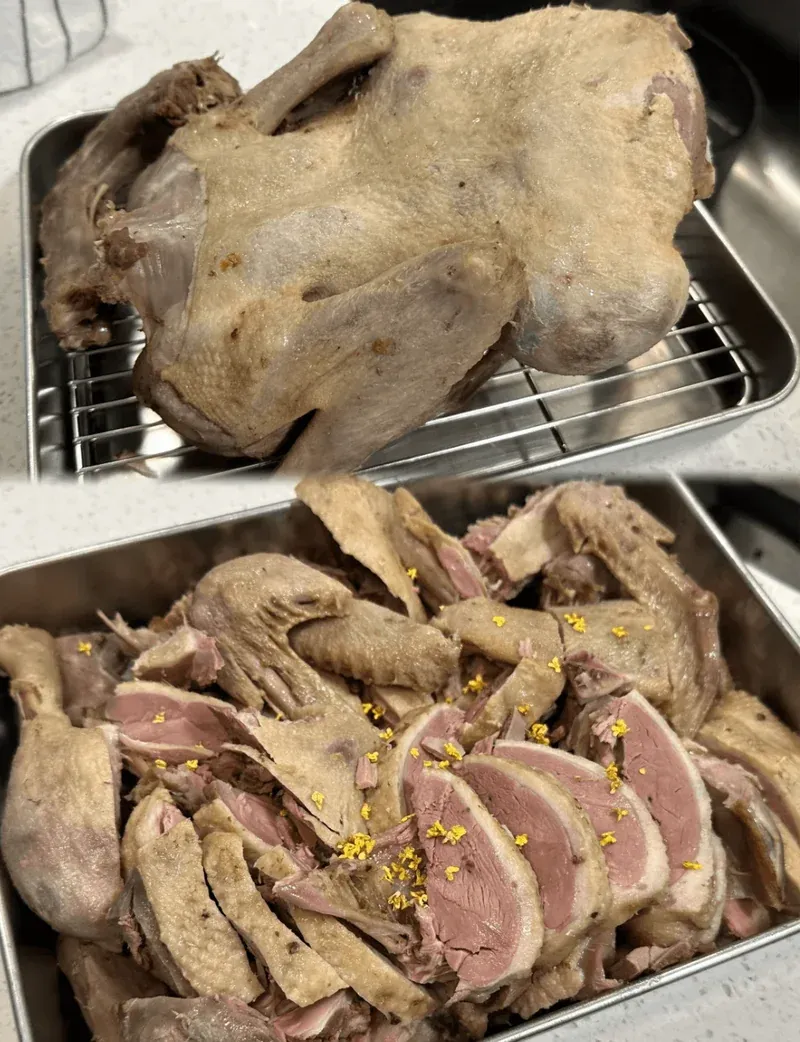
- Remove the duck from the poaching liquid and allow it to cool at room temperature. Refrigerate for at least an hour to ensure the juices settle and the skin tightens, facilitating clean slicing.
Step 6: Slicing and Presenting
- Slice the duck into small, rectangular pieces. The skin should be a pristine white, and the meat should reveal a subtle rosy tint. Serve chilled or at ambient temperature.
Tips for Success
- Maintain Gentle Heat: Avoid boiling, which toughens the meat and makes the skin greasy. A gentle simmer is key.
- Salt Infusion: Toasting the salt with peppercorns is essential. This process releases the peppercorns’ oils, infusing the salt with its unmistakable aroma.
- Color of the Meat: Do not worry if the meat appears pink; this is a sign of successful salting and poaching, not undercooking.
- Choose Quality Salt: Coarse sea salt is preferred for its ability to draw moisture effectively, leading to a firmer skin texture.
🧪Nutritional Information (Per Serving)
- Calories: 320 kcal
- Protein: 23 g
- Total Fat: 25 g (Duck fat is rich in beneficial monounsaturated fats)
- Carbohydrates: 1 g
- Iron: 16% DV
- Sodium: 860 mg (Due to the traditional salting process)